

Our history
From tradition to legend: Strasbourg's Christmas market
Every winter, Strasbourg dresses up in lights, continuing a tradition that spans centuries. Dating back to the 16th century, Strasbourg's Christmas market is much more than just an event: it is a living history, woven with rituals, expertise and shared emotions. Discover the key stages of this adventure, from its origins to the present day, which have made Strasbourg the true Christmas capital.
-
1570
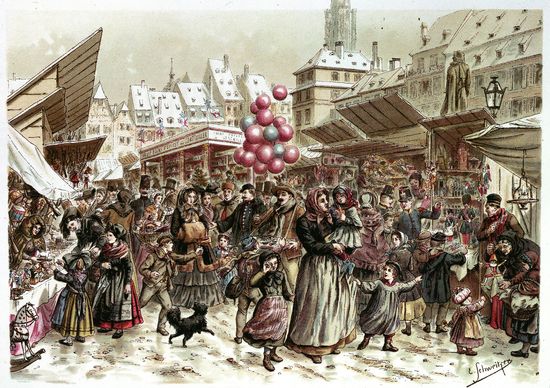
1570
The birth of Christkindelsmärik
In 1570, Strasbourg saw the birth of the Christkindelsmärik, a market dedicated to the Baby Jesus. Beneath the snow-covered rooftops, the first artisans began a tradition that would endure for centuries.
-
1869

1870
Installation place Broglie
In 1870, the Christmas market found a new home on Place Broglie. For over a century, this iconic location would become the setting for Strasbourg’s winter magic.
-
1991

1992
Strasbourg Christmas Capital
In 1992, the Christmas market took on a new dimension and became “Strasbourg: Capital of Christmas.” This title cemented its European reputation and confirmed its cultural prestige.
-
1999

2000
Le Grand Sapin place Kléber
In 2000, the Grand Sapin Christmas tree took its place on Place Kléber as the central symbol of the holiday season. Erected every winter, it embodies the light and generosity of Strasbourg, the Christmas Capital.
-
2001

2002
Village du Partage is born
In 2002, Strasbourg Christmas Capital launched the Village of Sharing. Located on Place Kléber, it brings together local organizations each year to foster a spirit of warmth and community at the heart of the festivities.
-
2010

2010–2014
A strong international presence
Between 2010 and 2014, the Christmas market attracted nearly 2 million visitors per year. The diversification of offerings and the emergence of themed markets have bolstered the prestige and European influence of Strasbourg, the Christmas Capital.
-
2015

2015
The Marché Off is born
In 2015, Strasbourg: Capital of Christmas launched the Marché Off, a space dedicated to organizations in the social and solidarity economy. This initiative reinforces the responsible and community-focused spirit of the holiday season in the city.
-
2015
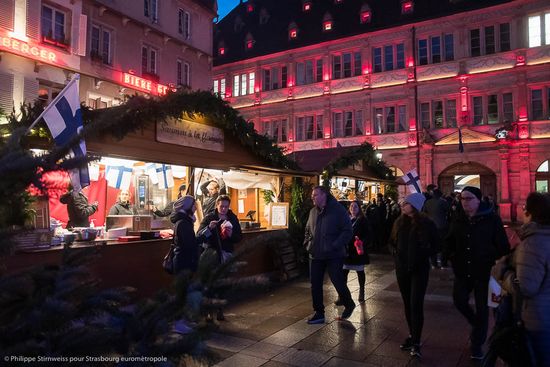
2016-2019
International at the heart of Christmas
Between 2016 and 2019, Strasbourg: Capital of Christmas opened its markets to other cultures, traditions, and crafts. The annual spotlight on a different country highlights diversity and enhances the city’s European influence during the holiday season.
-
2019
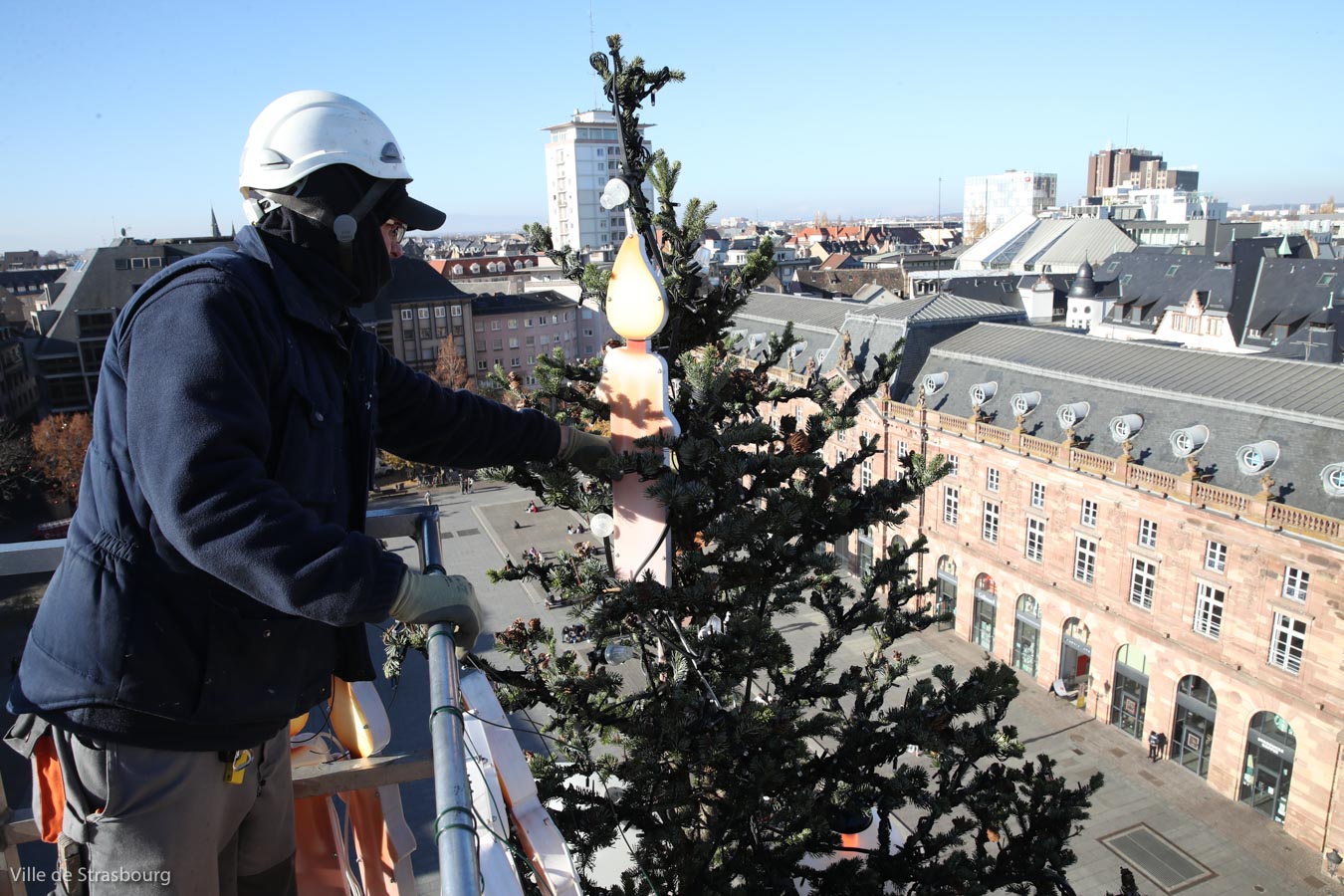
2020
A break imposed by history
In 2020, for the first time in centuries, the Strasbourg Christmas market was canceled due to the pandemic. Only the Grand Sapin remains on Place Kléber, serving as a reminder of the resilience and hope at the heart of the holiday season.
-
2020

2021–2024
A new era for Christmas
Between 2021 and 2024, Strasbourg's Christmas market will undergo a transformation based on the recommendations of a citizens' jury. Wider aisles for smoother traffic flow, a focus on local crafts and short supply chains, a revamped aesthetic and energy efficiency: Strasbourg, Capital of Christmas, is asserting a more inclusive, participatory and responsible image.
-
2024

2025
Certified sustainable Christmas
In 2025, Strasbourg, the Christmas Capital, earned ISO 20121 certification, demonstrating its commitment to a sustainable, responsible, and inclusive event. Combining authenticity, modernity, and European influence, the city reaffirms its ability to celebrate Christmas with thoughtfulness and elegance.
